When the Chancellor, three Cabinet Ministers, the NCSC CEO, and the Director General of the National Crime Agency personally co-sign a letter to UK business leaders, you don't ignore it. The NCSC just reported 204 nationally significant cyber incidents, with 18 highly significant attacks marking a 50% increase for the third consecutive year. Marks & Spencer lost over £300 million. A healthcare attack contributed to a patient death. Empty shelves appeared in supermarkets. The government has g
Windows 11 25H2 landed on 30 September 2025, and you're probably ignoring it because "it's just another update." Wrong. This is Microsoft finally removing the attack surfaces ransomware gangs have been exploiting for years. PowerShell 2.0? Gone. WMIC? Gone. Both are documented malware vectors that criminals use to bypass your security. The update weighs 200KB for existing 24H2 systems. One restart. Done. Enterprise editions get 36 months of support. But you're still on 23H2, aren't you? Your sup
Enough theory. Time for action. Here's your step-by-step plan to move from "Dave does everything" to sustainable IT support that won't collapse when Dave finally reaches breaking point. Start tomorrow.
You don't need to choose between Dave and professional IT support. The best approach? Dave becomes your strategic IT leader while specialist MSPs handle the complex stuff Dave shouldn't have to figure out alone.
Dave's the only one who knows the admin passwords. Dave's the only one who understands the custom configurations. Dave's the only one who knows which cables do what. When Dave goes, that knowledge disappears. Forever.
Co-op's CEO has officially confirmed their April 2024 cyberattack cost £80 million in earnings impact. The perpetrators? Teenagers using basic social engineering to steal personal data from all 6.5 million members. No sophisticated nation-state attack, just "Can you reset my password, mate?" targeting the right employee. With zero cyber insurance coverage, Co-op absorbed every penny while 2,300 stores suffered empty shelves and 800 funeral homes reverted to paper-based systems. But £80 million m
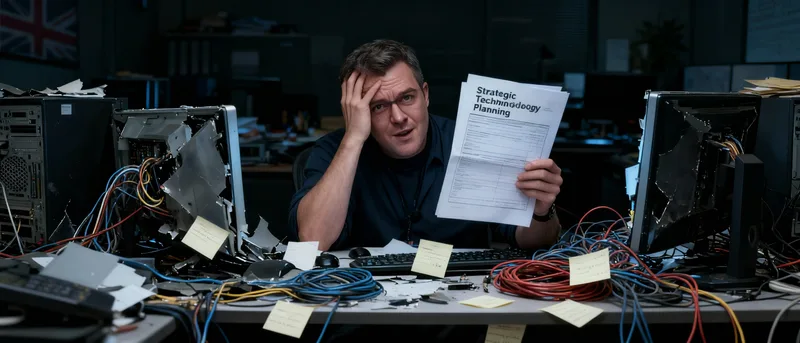
Dave's first in, last out every day. Dave hasn't taken a proper lunch break in months. Dave gets defensive when you ask about the systems. Sound familiar? Your IT manager is drowning, and you've been pretending not to notice
Let's examine the data: 30 years of single IT manager failures. The patterns are consistent, the outcomes predictable, and the business impact devastating. Here's what happens when your "Dave from IT" model reaches its inevitable breaking point.
You want a network admin, security expert, help desk manager, systems architect, IT consultant, cloud specialist, compliance officer, and data protection expert. For £50k. Are you having a laugh? Here's what you're actually asking for.
It's Monday morning. Your server's having a wobble. Your email's down. Half your team can't access the customer database. And where's Dave? Probably fixing Janet's printer. Again. Welcome to the single point of failure that's about to snap and take your business with it.
Most UK businesses think they're fine without strategic IT leadership until they're not. These five diagnostic questions expose the difference between thriving with technology and merely surviving despite it. Question 1: Are technology decisions made strategically or reactively? If you're replacing servers because they died rather than planned refresh cycles, you need help. Question 5: Will current systems scale gracefully as you grow? Planning to double in size without considering technology im
Full-time CIO in London: £180k-250k annually plus benefits. Fractional CIO: £15k-30k for strategic expertise when you need it. The mathematics are brutal, but the quality difference might surprise you. Many fractional executives are senior professionals who prefer variety over corporate politics. You get FTSE 250 CIO experience for a fraction of full-time cost. While your competitors burn budget on executives who spend half their time in meetings, you access strategic guidance scaled to actual n
Dave from IT is brilliant at keeping your systems running. But calling him your CIO is like calling your mechanic an automotive engineer. Most UK small businesses confuse operational IT support with strategic technology leadership, and it's costing them millions. While Dave troubleshoots email issues, real CIOs design five-year technology roadmaps. The difference? Strategic thinking that aligns technology investments with business objectives. Fractional CIO services deliver genuine C-level exper
Cybersecurity isn’t just an enterprise issue — it’s a survival issue for UK SMEs. With 96% of attacks aimed at small businesses and 60% of victims closing within six months, the myth of being “too small to hack” is lethal. This article tears apart the excuses business owners use, reveals the hidden costs of breaches, and explains why simple, affordable defences like Cyber Essentials, patching, MFA, and staff training are the only reason some firms survive. Don’t wait until it’s too late — find o
Cybersecurity is not just an enterprise problem. With 96% of attacks targeting small businesses and 60% of victims closing within six months, UK SMEs face a survival crisis. This article exposes the myths keeping businesses vulnerable, the real financial impact of attacks, and the role of supply chain risk. It explains why Cyber Essentials and board-level governance are no longer optional, but essential. Written for directors and leaders, it lays out practical steps to protect your business befo
Cybersecurity is not just an enterprise problem. With 96% of attacks targeting small businesses and 60% of victims closing within six months, UK SMEs face a survival crisis. This article exposes the myths keeping businesses vulnerable, the real financial impact of attacks, and the role of supply chain risk. It explains why Cyber Essentials and board-level governance are no longer optional, but essential. Written for directors and leaders, it lays out practical steps to protect your business befo
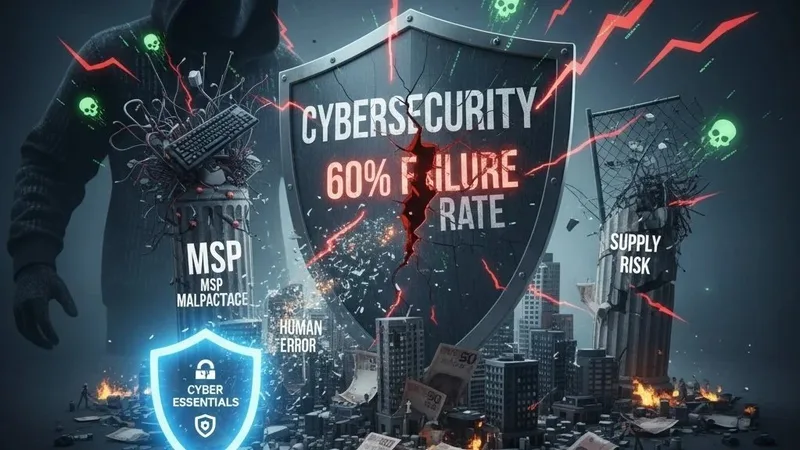
Sixty per cent of small businesses don’t survive a cyberattack. That’s not a scare tactic, it’s a reality. UK SMBs are under siege, targeted in 96% of attacks because criminals know you’re under-protected and overconfident. This post rips apart the myth that cybersecurity is “only an enterprise problem” and shows how MSP malpractice, human error, and supply chain risk are leaving businesses exposed. Most importantly, it lays out the simple, affordable steps like Cyber Essentials that block 95% o
The UK Government's July 2025 consultation response commits to implementing world-leading ransomware legislation by late 2026. Three key proposals include payment bans for public sector/CNI, universal 72-hour incident reporting, and government pre-approval for private sector payments. This will dramatically increase ransomware targeting of SMBs as criminals pivot from restricted sectors to easier private targets.
After Monday's podcast revelation that government cybersecurity frameworks can actually make sense, let's talk implementation reality. Cyber Essentials costs £320-600 for self-assessment, takes 2-4 weeks of focused effort, and genuinely stops 80% of attacks targeting UK SMBs. But here's what the NCSC won't tell you: most businesses discover massive security gaps during the assessment process. I've guided dozens through certification, and the pattern is always the same. "We thought we were secure
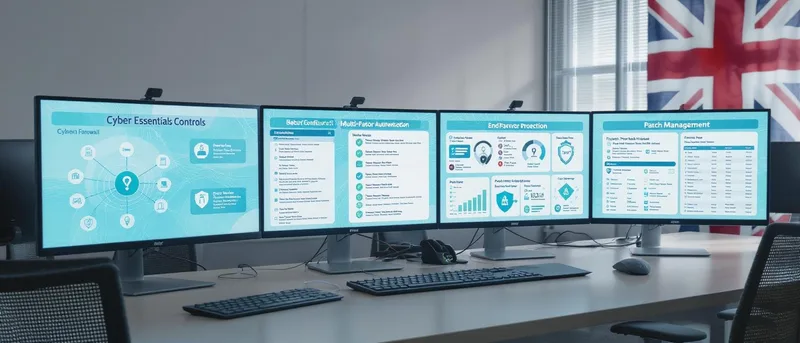
After Monday's podcast revelation that government frameworks can actually make sense, let's dive deep into the five Cyber Essentials controls that provide enterprise-level protection without enterprise-level budgets. Boundary firewalls, secure configuration, access control, malware protection, and patch management. Five areas that stop 80% of attacks against 80% of small businesses 80% of the time. That's a lot of eighties, but the maths works. These aren't theoretical controls dreamed up by bur
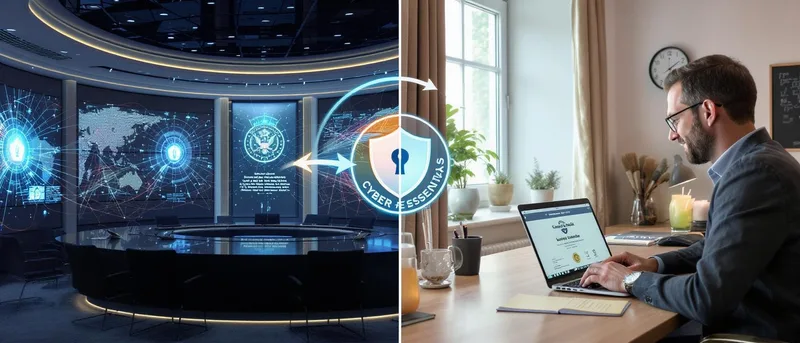
Right, let's address the elephant in every small business owner's mind after last week's White House security episode: if we're facing enterprise-level threats, do we need enterprise-level budgets? The answer is a resounding no. The UK's Cyber Essentials framework takes everything we learned about systematic security thinking and distills it into five achievable controls that cost less than most businesses spend on coffee. Insurance companies love it (lower claims), government contracts require
After last week's mind-bending dive into White House security with Theresa Payton's insights, you're probably wondering if protecting your business requires government-sized budgets and ex-GCHQ analysts. The answer will surprise you. Monday's episode reveals how the UK's Cyber Essentials framework takes everything we learned about systematic security thinking and makes it achievable for businesses that can't hire situation room experts. Five controls, 80% protection against real threats, costs l
When someone who protected the President's digital communications tells you to "verify and never trust," you should probably listen. Former White House CIO Theresa Payton's evolution of Reagan's famous principle isn't just clever wordplay - it's essential survival advice for 2025. Deepfakes can fool video calls, AI perfectly mimics email writing styles, and social engineering has become so sophisticated that even cybersecurity professionals get caught out. When seeing and hearing are no longer b
After this week's deep-dive into technical debt psychology, let's talk about actually fixing the bloody mess. Your "temporary" solutions from 2019 are now permanent vulnerabilities that criminals are actively exploiting. Every day you delay proper technical debt management, you're bleeding money on maintenance, security patches, and the inevitable breach costs. I've seen £50 million companies destroyed by technical debt they knew existed but couldn't prioritize properly. Here's your framework fo
M&S lost £300 million because decades of technical debt left them unable to respond to basic social engineering. Co-op faced identical DragonForce attacks but recovered quickly through operational agility. The difference? M&S accumulated digital debt like a hoarder accumulates rubbish, whilst Co-op invested in resilience. Technical debt isn't just old software - it's every deferred security decision, every "temporary" workaround, every vendor relationship without oversight. Podcast Episo
Buckinghamshire engineering firm thought they had "pretty good visibility" into their IT environment. DNS monitoring revealed 247 unauthorized cloud services, 43 different communication platforms, and £127,000 annual Shadow IT spending they didn't know existed. Dropbox, Google Drive, OneDrive, iCloud, plus dozens of project management tools, design software subscriptions, and messaging platforms. One week of DNS logs exposed six years of unauthorized software proliferation. The technical impleme
Episode 6 drops today with a statistic that'll make your blood run cold: 42% of business applications are unauthorized. While you're worrying about hackers, your helpful employees have built them a data highway using WhatsApp customer service, Karen's Dropbox backup strategy (password: "Password"), and seventeen project management tools for twelve people. Mauven brings her government cyber perspective on government Shadow IT disasters, while Noel shares the DNS monitoring method that revealed 200+ cloud con
Passwords are circling the drain, and this time it’s for real. Microsoft, Apple, and Google are killing off passwords and pushing passkeys by default across their platforms. Microsoft is going passwordless by force, Apple is making it seamless, and Google is syncing passkeys everywhere. The UK government is onboard too, rolling out passkeys across public services. This isn’t future talk, it’s happening now. If your IT provider is still clinging to complex password policies and SMS MFA, you’re be
After Monday's podcast and yesterday's NCSC deep-dive, I want to tackle the elephant in the room: if three random words are so brilliant, why do smart business owners still use "password123"? Why does 78% password reuse persist despite constant breach warnings? The answer isn't technical ignorance - it's human psychology. We're fighting millions of years of evolution with spreadsheets and complexity requirements. Our brains aren't wired for digital security, they're wired for survival shortcuts.
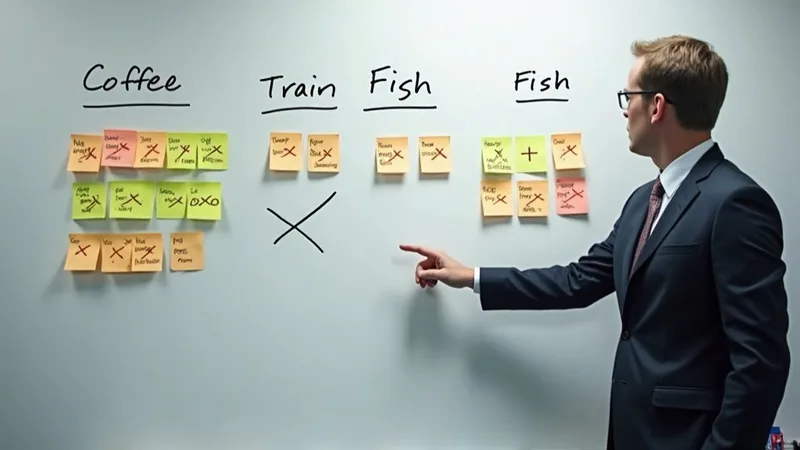
After last night's podcast revelation about our collective digital archaeology disaster, let's talk about the solution hiding in plain sight. The UK's National Cyber Security Centre dropped wisdom that sounds too simple to work: pick three random words for your passwords. "Coffee train fish." "Wall tin shirt." "CabbagePianoBucket." Easy to remember, nightmare to crack, and unlike "password123," not on every hacker's greatest hits list. While we're mashing together words and numbers in barely inv
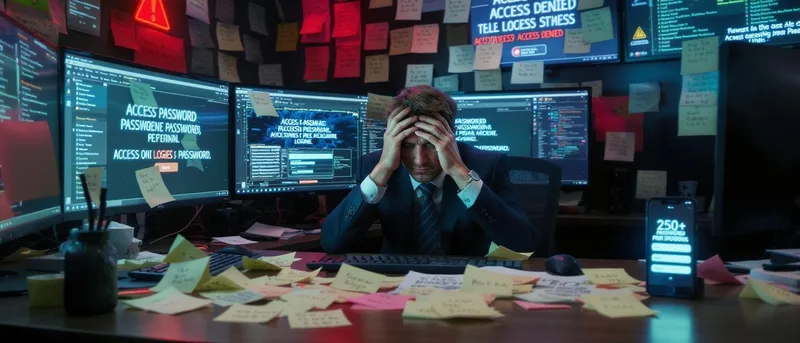
Picture this: It's midnight, crisis hits, you need email access urgently. Staring at the login screen, mind completely blank. Was it your dog's name plus random numbers? Your old football team with an exclamation mark? Welcome to digital archaeology - the art of excavating your own memory for password variations you can't quite remember. Tonight's podcast reveals why we've become amateur archaeologists in our own digital lives, managing 250+ passwords while 78% of us reuse them. The midnight pas
This week we're staging an intervention for UK SMBs trapped in digital archaeology hell. Picture this: It's midnight, crisis hits, you need email access, and your mind goes completely blank. Was it your dog's name plus random numbers? Your old football team with an exclamation mark? Welcome to digital archaeology - excavating your own memory for password variations across 250+ accounts. Monday's podcast kicks off our deep-dive into why 78% of us reuse passwords, why only 15% use managers, and ho
Meet the Sheffield manufacturing firm that turned patch management from monthly panic into competitive advantage. Thirty-five employees, fifteen-year-old custom software, and an MD who thought "cybersecurity" was just expensive insurance. Then a supplier breach nearly destroyed their government contracts. Fast-forward eighteen months: they're winning contracts specifically because of their security posture, staff morale is up, and they haven't had a single security incident. Their secret? They s
Stop treating patch management like Russian roulette. You don't need enterprise-grade test labs to deploy patches safely. You need a structured approach that balances speed with stability. I've managed patches across everything from 50-seat SMBs to global enterprises with 100,000+ endpoints. The principles are identical: test smart, deploy fast, have a rollback plan. Most SMBs get this backwards - they test forever and deploy never, leaving themselves exposed to known vulnerabilities while perfe
Think your law firm is too small for hackers to bother with? DPP Law thought so too—right up until they faced a £60,000 fine and a public shaming after a catastrophic cyber attack. A single unsecured admin account was all it took to unleash chaos. No MFA, no breach reporting, no chance. If you are still relying on luck instead of basic cyber hygiene, you are playing a dangerous game with your clients’ trust—and your firm’s future. Cyber Essentials is the starting line, not the victory lap. How m
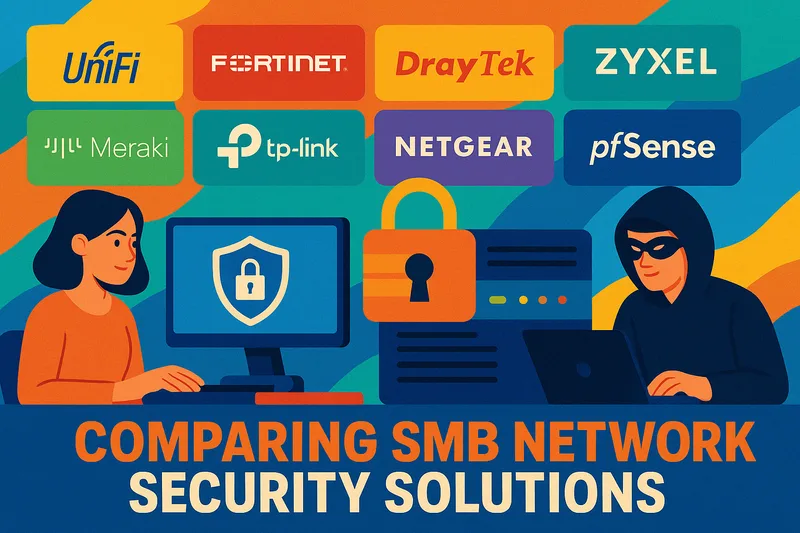
Not all firewalls are created equal—some vendors make patching painless, others seem to actively hide the fixes. We evaluated SonicWall, Fortinet, UniFi, DrayTek, Zyxel, WatchGuard, Sophos, Meraki and more using a realistic UK small business setup: one firewall, one switch, two access points. Then we scored them out of 50 on cost, usability, licensing, and update handling. Spoiler: UniFi smashed it. SonicWall? Not so much. If you want to know which vendor respects your time and budget—and which
Think you’re safe clicking through a CAPTCHA? Think again. Cybercriminals are hijacking your trust with fake CAPTCHA pop-ups that trick you into downloading malware—by following simple keyboard instructions you’d never question. One click and boom—your passwords, wallets, and entire digital life are up for grabs. This isn’t just clever, it’s terrifyingly effective. If you’ve ever hit "I’m not a robot," you need to read this before you hand your system over to hackers.
A critical flaw in DrayTek routers is wreaking havoc on UK broadband connections — and no, this isn’t just a “techie problem.” Businesses across the country are unknowingly running vulnerable, outdated routers that are now being blocked by ISPs for good reason. DNS hijacks, remote code execution, and silent compromises are all in play. If you're still clinging to your 2018 networking gear like it’s a family heirloom, it’s time to wake up. This isn’t about cost — it’s about negligence. Here’s wha
If you're still not using 2-Step Verification (2SV), you might as well leave your front door wide open, bake some cookies for the burglars, and leave a note that says, "Take what you like, I clearly don’t give a shit." Sounds ridiculous? So does ignoring the absolute bare minimum of online security. Passwords alone are about as effective as a chocolate teapot, and cybercriminals love people who think 2SV is “too much hassle.” If typing in a short code now and then feels like a chore, maybe the i
North Korea's Lazarus hackers are back, gleefully slipping malicious code into popular NPM packages—think razor blades hidden in your Halloween sweets. Hundreds of developers unwittingly invited cybercriminals into their digital lives, losing sensitive data and perhaps some self-respect. This latest supply-chain fiasco underscores a crucial lesson: trust no package blindly. Treat your code dependencies like milk—check regularly, or risk finding something unpleasantly chunky in your morning coffe